The Hidden Costs Broken Discipline Systems Create for Schools
After three decades leading K-12 schools, I’ve witnessed districts hemorrhage money without understanding why. The culprit? The devastating costs broken discipline creates throughout your entire system. Most administrators focus on visible metrics like suspension rates while missing the massive financial drain happening behind the scenes.
Here’s what I know from experience: discipline isn’t a student behavior problem. It’s a systems problem that demands systematic solutions. When schools ignore these underlying issues, they fall into what we call Discipline Drift—the gradual erosion of consistent expectations and procedures that creates chaos.
The Staggering Financial Costs Broken Discipline Creates
Let’s examine numbers that will shock most administrators. Poor discipline systems cost the average district $2,800 per student annually. That’s not just suspension-related expenses—it’s the full spectrum of financial bleeding.
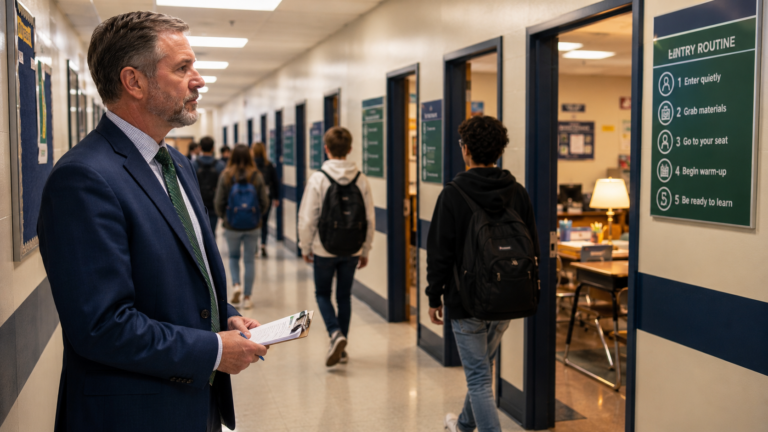
Administrative time tops the list of hidden expenses. Principals spend 40% of their day managing discipline issues instead of instructional leadership. At an average principal salary of $98,000, that’s $39,200 in misallocated leadership annually per building. Meanwhile, assistant principals become full-time disciplinarians rather than instructional coaches.
Consider this scenario: Lincoln Middle School’s principal handles 15 discipline referrals daily. Each incident requires 20 minutes for investigation, documentation, and follow-up. That’s five hours of lost instructional leadership every single day. Over a school year, that’s 900 hours diverted from what matters most—student learning.
Substitute costs explode when discipline systems fail. Chronic disruptions force teachers into reactive management modes. They burn out faster, take more sick days, and leave the profession entirely. The average substitute teacher costs $120 daily. Multiply that by increased absence rates in chaotic schools, and you’re looking at tens of thousands in unnecessary expenses.
Academic Achievement Costs That Destroy Performance
The academic costs broken discipline imposes extend far beyond disruptive students. Research shows that classroom interruptions reduce learning time by 20 minutes daily across all students. That’s 60 hours of lost instruction annually per classroom—equivalent to three weeks of school.
Teachers in poorly managed schools spend 35% more time on behavior management than instruction. This creates what we identify as a 3-System Breakdown: when classroom management, administrative support, and school-wide expectations collapse simultaneously. Students in these environments show measurably lower achievement gains regardless of their individual behavior records.
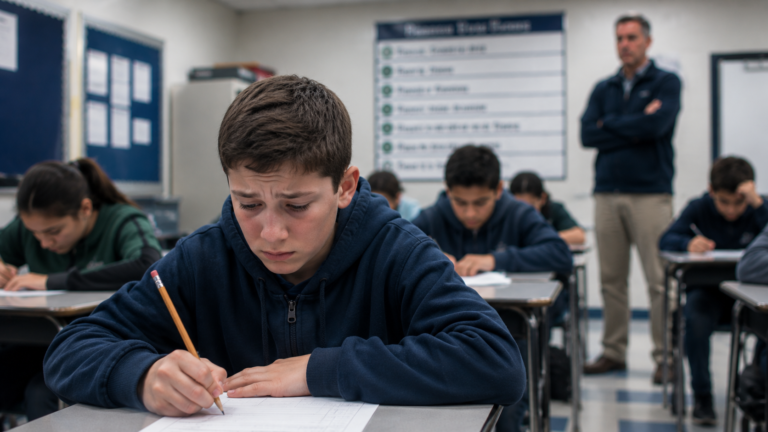
Here’s a real example: Washington Elementary had one chronically disruptive fifth-grader who impacted 25 classmates’ learning trajectories. The teacher spent 40 minutes daily managing this single student’s behavior. By year’s end, the entire class scored 15 points lower on state assessments compared to similar demographics in well-managed schools.
Furthermore, schools with broken discipline systems see test scores plateau or decline. State accountability ratings suffer. Property values in the district drop. The community loses confidence in school leadership, creating a downward spiral that’s difficult to reverse.
Staff Turnover Costs That Cripple School Culture
Teacher retention becomes impossible when discipline systems fail. The average cost to replace one teacher ranges from $9,000 to $21,000, depending on location and subject area. However, these figures don’t capture the full impact of constant turnover.
Schools with poor discipline lose 25% more teachers annually than well-managed buildings. New teachers—who cost significant resources to train—leave within two years at double the national average. This creates what we call the Accountability Loop breakdown: when staff members don’t stay long enough to build relationships or implement consistent practices.
Support staff turnover accelerates too. Custodians, paraprofessionals, and office personnel flee chaotic environments. Each departure triggers recruiting, hiring, and training expenses that drain already tight budgets. More importantly, institutional knowledge walks out the door with every departing employee.
Consider Roosevelt High School’s situation: they hired 12 new teachers in August, then replaced eight of them by January. The cost? $180,000 in recruitment and training expenses, plus immeasurable damage to student continuity and school culture.
Legal and Liability Costs That Threaten Stability
Broken discipline systems generate expensive legal exposure. Inconsistent enforcement leads to discrimination claims. Inadequate documentation creates due process violations. Emergency situations result in injury lawsuits that can devastate district budgets.
According to the National Association of Secondary School Principals, districts face an average of 2.3 discipline-related legal challenges annually. Each case costs between $15,000 and $75,000 in legal fees alone, before considering settlement amounts.
Insurance premiums increase when districts show patterns of discipline-related incidents. Workers’ compensation claims rise as staff injuries from student altercations mount. Property damage from behavioral incidents requires constant repair and replacement. These expenses compound annually, creating budget crises that force cuts to educational programs.
Special education compliance becomes nearly impossible without systematic discipline approaches. Federal investigations, corrective action plans, and mandated improvements consume tremendous resources while yielding minimal results. This is where the 4 Pillars of Discipline Stability—clear expectations, consistent procedures, data-driven decisions, and staff accountability—prove essential.
The Hidden Opportunity Costs of Ineffective Systems
Perhaps most devastating are opportunity costs—what schools could achieve with properly functioning discipline systems. Effective discipline enables principals to focus on instructional leadership, teachers to maximize learning time, and students to reach their potential.
Schools that fix their discipline systems see immediate improvements. Take our work with East Central High School: suspensions dropped from 604 to 84 in one year, while graduation rates jumped from 52 to 77 percent. Jackson Elementary reduced suspensions from 51 to just 1 annually. Most dramatically, Rio Hondo ISD achieved a 99 percent reduction in disciplinary referrals district-wide.
These transformations didn’t happen by accident. They resulted from systematic implementation of comprehensive discipline frameworks that address root causes rather than symptoms. When schools commit to this approach, positive changes compound annually, creating momentum that transforms entire cultures.
Building Systems That Actually Work
Effective discipline requires comprehensive systems thinking. You need clear expectations, consistent procedures, data-driven decisions, and staff accountability. Most importantly, you need leadership commitment to systematic change rather than reactive responses.
Start by conducting a thorough audit of current practices. Identify gaps, inconsistencies, and resource drains. Then develop integrated systems that address root causes instead of managing symptoms. This prevents Discipline Drift and creates sustainable improvement.
Remember: discipline problems reflect systems failures, not character defects. When you fix the system, behavior improves automatically. Your discipline system either supports learning or undermines it—there’s no middle ground.
The financial impact of broken discipline extends far beyond what most administrators realize. However, schools that commit to systematic solutions discover that effective discipline systems pay for themselves within the first year while creating foundations for sustained success. The choice is yours: continue absorbing these massive costs broken discipline creates, or invest in systematic solutions that generate long-term returns.