Addressing Racial Disparities in School Discipline Consequences
When Black girls face disproportionate discipline at rates three times higher than their white peers, most schools blame the students. However, the real problem lives in your system design — not your student population.
Arlington’s transformation from 100 fights to single digits didn’t happen by accident. Furthermore, it didn’t happen because they hired different students. Instead, they stopped responding to behavior and started engineering the conditions that prevent it.
Why Disproportionate Discipline Happens By Design
Most principals think discipline disparities result from student choices or cultural differences. In contrast, these gaps reveal exactly where your system breaks down. When your data shows Black girls receiving office referrals for “defiance” while white students get redirected for identical behaviors, that pattern exposes your structure problem.
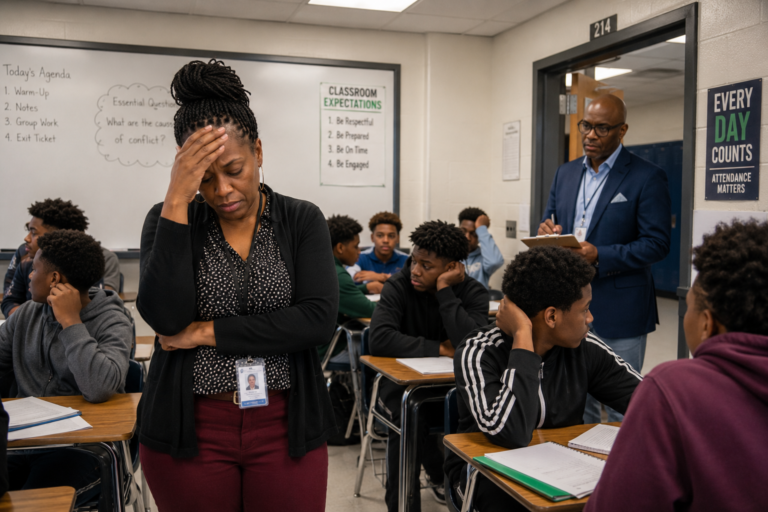
For example, consider how subjective infractions get handled differently. Therefore, a Black student rolling her eyes becomes “disrespectful,” while a white student doing the same gets seen as “having a bad day.” This happens because your system lacks clear behavioral definitions and consistent response protocols.
As a result, teachers default to their personal interpretation of behaviors. Meanwhile, implicit bias fills the gaps where clear systems should operate. Consequently, disproportionate discipline becomes inevitable rather than accidental.
The Three-System Breakdown That Creates Discipline Drift
Every school that struggles with disproportionate discipline suffers from what EDCO calls the Three-System Breakdown. First, your prevention system fails to create predictable environments. Next, your intervention system responds inconsistently to similar behaviors. Finally, your accountability system tracks punishments instead of measuring prevention success.
Most importantly, this breakdown creates what we term “Discipline Drift” — when your school slowly moves from proactive structure to reactive punishment. Because teachers receive no clear behavioral expectations framework, they improvise responses. Therefore, similar behaviors get vastly different consequences depending on which adult handles them.
However, schools like Jackson Elementary proved this pattern can reverse. When they implemented the Four Pillars of Discipline Stability, suspensions dropped from 51 to just 1 in a single year. Furthermore, their achievement gaps closed simultaneously because students spent more time learning and less time in punishment cycles.
How PBIS Done Wrong Creates More Disproportionate Discipline
Many schools implement PBIS thinking it will automatically reduce discipline disparities. In contrast, poorly designed PBIS systems often make disproportionate discipline worse. When reward systems favor compliance over engagement, they penalize students whose cultural communication styles differ from school expectations.
For instance, Black girls often receive fewer positive behavior recognitions because their assertiveness gets misinterpreted as defiance. Meanwhile, the same assertive behaviors in other students get praised as “leadership potential.” As a result, the reward system reinforces existing bias patterns rather than correcting them.
Therefore, effective PBIS requires intentional equity audits. Furthermore, it demands that every adult understands how their personal lens affects behavior interpretation. Most importantly, it needs clear behavioral definitions that remove subjective judgment from discipline decisions.
The Arlington Model: Engineering Prevention Instead of Managing Punishment
Arlington’s success came from shifting their entire approach. Instead of asking “How do we punish this behavior?” they asked “What conditions would prevent this behavior?” Consequently, they discovered their discipline problems were actually unmet needs problems.
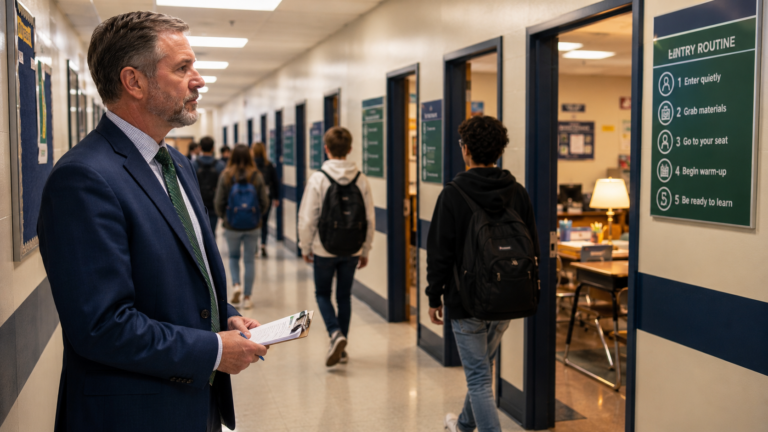
First, they audited their physical environment for triggers. Because crowded hallways created friction, they redesigned traffic flow. Next, they examined their daily schedules for stress points. Since transitions caused most conflicts, they built buffer time and clear movement protocols.
Additionally, they trained every adult to recognize cultural communication differences. Therefore, behaviors previously labeled as “disrespectful” got reframed as “different communication styles requiring teaching, not punishment.” As a result, referrals plummeted because teachers had tools instead of just consequences.
Auditing Your System for Disproportionate Discipline Patterns
When did you last examine your discipline data through an equity lens? However, most principals review only total numbers rather than demographic breakdowns. Furthermore, they track punishments given rather than problems prevented.
Start with these specific audit questions: Which students receive multiple referrals for subjective infractions like “defiance” or “disrespect”? Meanwhile, which students get informal redirections for similar behaviors? Additionally, which teachers send the most referrals, and do those referrals show demographic patterns?
For example, if one teacher sends 60% of your Black girl referrals, that’s not a student problem — it’s a training need. Because the Accountability Loop demands that you measure both student outcomes and adult implementation, you must track whether your interventions work for all student groups equally.
Building Structure That Serves All Students
East Central High School transformed their culture by implementing predictable systems that removed adult discretion from basic discipline decisions. Therefore, their suspensions dropped from 604 to 84, while graduation rates climbed from 52% to 77%. Most importantly, their discipline disparities disappeared because the system treated all behaviors consistently.
However, this requires more than policy changes. Furthermore, it demands that every adult receives training on recognizing and interrupting bias patterns. Additionally, your leadership team must commit to ongoing data review and system adjustments.
The structure comes first — then the behavior follows. Meanwhile, when Black girls see that your system operates fairly and predictably, they engage differently. As a result, the discipline problems you thought were student problems reveal themselves as system problems that your leadership can actually solve.
Your current discipline system is working exactly as designed. Therefore, if it produces disproportionate outcomes, you need different design principles. Research consistently shows that schools with clear, equitable systems serve all students better — not just those who traditionally struggled with discipline.