When Teachers Collect Classroom Management Tips, Your Discipline System Is Failing
When teachers are frantically collecting classroom management tips from Pinterest, Facebook groups, and professional development sessions, it’s not professional growth. It’s a red flag that your school lacks a functioning discipline system.
After three decades in K-12 leadership, I’ve witnessed this pattern repeatedly. Teachers aren’t failing at discipline because they lack creativity or dedication. They’re failing because they’re trying to solve a systems problem with individual solutions.
The Classroom Management Tips Addiction Cycle
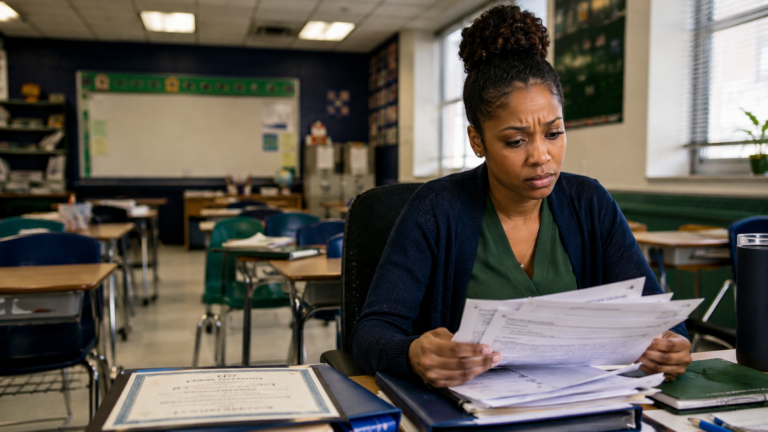
Here’s what happens in schools without proper discipline systems. Teachers struggle with student behavior daily. They feel overwhelmed and unsupported by administration. Consequently, they turn to quick fixes and classroom management tips online.
Meanwhile, they implement token economies one week. They try behavior charts the next week. Then they switch to noise level meters or fidget tools. Each new strategy works briefly before losing effectiveness completely.
This creates what I call the “tip addiction cycle.” Teachers constantly search for the next magical classroom management solution. They blame themselves when strategies inevitably fail. However, the real problem remains completely unaddressed.
For example, I observed a third-grade teacher who tried seventeen different behavior systems in one school year. She spent hundreds of dollars on materials and countless hours creating new charts. Meanwhile, her students received no consistent expectations outside her classroom.
Why Individual Classroom Management Tips Cannot Fix Systemic Issues
Individual classroom strategies fail because discipline problems aren’t classroom problems. They’re school-wide problems requiring school-wide solutions. This represents what we call “Discipline Drift” — the gradual breakdown of behavioral expectations across environments.
Consider this scenario I witnessed repeatedly. Mrs. Rodriguez uses a brilliant behavior management system in her fourth-grade classroom. Students earn points for following clear expectations. However, the cafeteria operates with completely different rules. The hallways lack adequate supervision entirely.
Students experience inconsistent expectations throughout their school day. They receive mixed messages about appropriate behavior in different locations. This confusion undermines every individual teacher’s classroom efforts systematically.
Furthermore, when teachers create isolated classroom systems, they waste enormous amounts of time and energy. Each teacher reinvents discipline wheels unnecessarily. They duplicate effort instead of leveraging collective systems and shared approaches.
The Real Indicators of Systemic Discipline Failure
Tip-collecting behaviors reveal deeper systemic issues that require immediate attention. First, your school lacks clear, consistent behavioral expectations across all environments. Students don’t understand what’s expected in classrooms versus hallways versus cafeterias.
Second, you probably provide inadequate administrative support for discipline issues. Teachers shouldn’t handle every behavioral problem independently without backup. They need clear escalation procedures and consistent administrative response patterns.
Third, your staff likely lacks unified training in discipline approaches. Everyone operates from different philosophical perspectives on behavior management. This creates confusion and inconsistency that students exploit continuously.
Additionally, successful schools don’t leave classroom management to individual teacher creativity. Research from the National Technical Assistance Center confirms that school-wide positive behavioral interventions significantly reduce discipline problems when implemented consistently.
What Effective Discipline Systems Actually Look Like
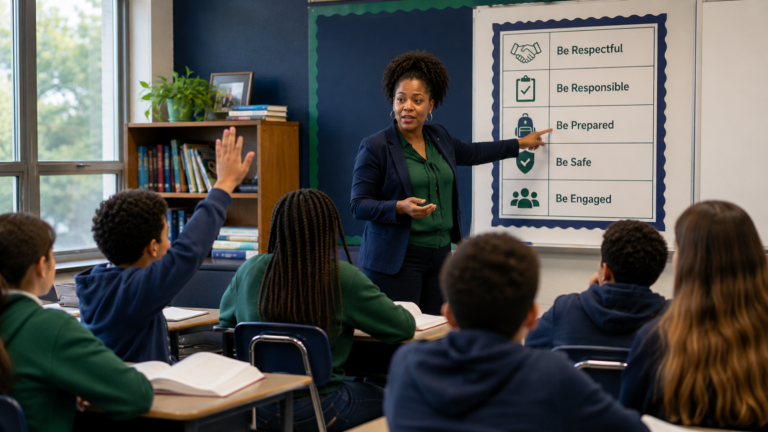
Effective discipline systems start with school-wide behavioral expectations that apply everywhere. These expectations work in classrooms, hallways, cafeterias, playgrounds, and school buses. Every staff member knows and reinforces identical standards consistently.
Next, these systems include consistent consequences across all environments. Students know exactly what happens when they meet or violate behavioral expectations. Consequences don’t vary based on which teacher or staff member they encounter.
Moreover, effective systems provide ongoing, unified staff training in discipline approaches. Everyone learns identical techniques and response strategies. This creates consistent responses to behavioral challenges throughout the building.
These systems also include systematic data collection and analysis processes. Schools track behavioral incidents, patterns, and intervention effectiveness regularly. They use this information to improve their approaches and prevent future problems.
At East Central High School, we saw suspensions drop from 604 to 84 incidents annually. Meanwhile, graduation rates increased from 52 to 77 percent. These results came from systematic approaches, not individual classroom management tips.
Moving Beyond Classroom Management Tips to Real Solutions
Stop encouraging teachers to collect random classroom management tips from social media. Instead, invest in comprehensive discipline system development that requires administrative commitment and adequate resources.
First, establish clear school-wide behavioral expectations through collaborative processes. Involve all stakeholders in developing these standards. Ensure expectations are specific, measurable, and achievable for students.
Then, train your entire staff using consistent methods and materials. Everyone needs identical foundations in your discipline approach. This includes teachers, administrators, support staff, and substitute teachers.
Additionally, create clear procedures for handling various behavioral situations appropriately. Teachers need to understand when they handle issues independently. They also need clear escalation paths for serious problems requiring administrative intervention.
Finally, implement ongoing monitoring and support systems for staff. Regular data review helps identify problems before they escalate unnecessarily. Consistent administrative support prevents teacher burnout and resignation.
The Leadership Challenge in Discipline Systems
Building effective discipline systems requires strong, committed leadership from administrators. You must shift from reactive problem-solving to proactive system building. This means investing significant time and resources upfront.
However, many administrators avoid this comprehensive work completely. They prefer quick fixes and individual solutions instead. This approach seems easier initially but creates enormous long-term problems.
True leadership means addressing root causes rather than surface symptoms. When your teachers constantly collect classroom management tips, you’re witnessing symptoms of systemic failure requiring immediate attention.
Therefore, take full responsibility for creating comprehensive solutions that work. Stop placing discipline burdens entirely on individual teachers’ creativity. Build systems that support everyone’s success and student growth.
Your discipline system assessment should reveal whether teachers need systems or just more tips.
The Bottom Line on Discipline Systems
Classroom management tips certainly have appropriate places in professional development activities. However, when tip-collecting becomes a survival strategy, you have systemic problems requiring systemic solutions immediately.
Your teachers deserve better than constantly searching for magical discipline solutions online. They deserve comprehensive systems that support their classroom success and student growth consistently.
The choice remains yours as a school leader. Continue treating symptoms with individual tips and tricks indefinitely. Or build the comprehensive discipline foundation your school actually needs for long-term success.