When Discipline Policy Creates Chaos
Your discipline policy creates chaos when it forces teachers to improvise during critical moments. However, most administrators believe their thick handbook solves classroom management problems. In reality, that three-ring binder sitting in filing cabinets across America represents the exact opposite of what schools need.
Teachers are finally saying what principals have suspected for years. Furthermore, the classroom itself works fine when the system behind it functions properly. Therefore, disruption patterns reveal systemic failures rather than individual shortcomings.
When Discipline Policy Creates Unpredictable Responses
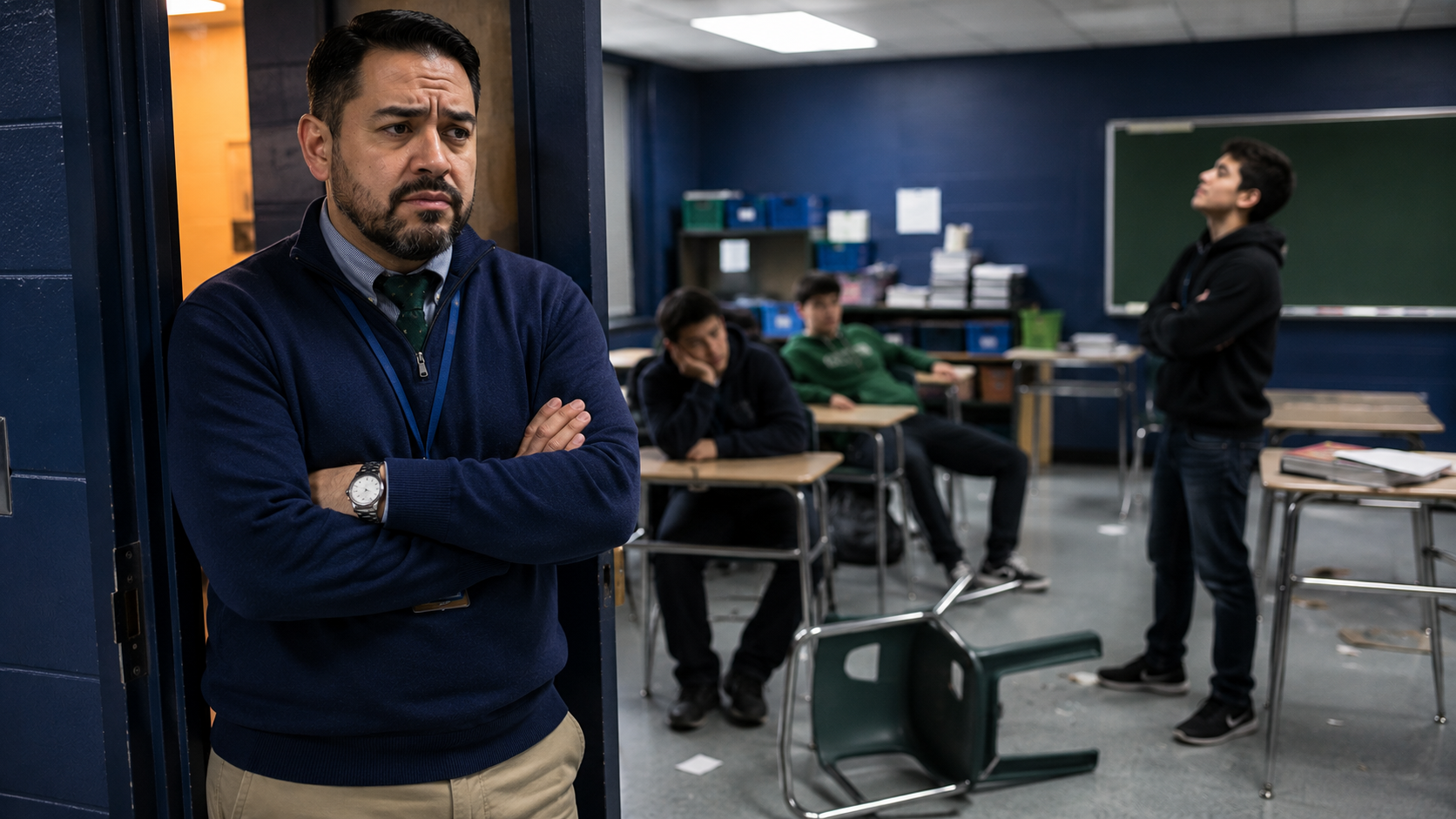
Walk into Lincoln Middle School on any Tuesday morning. Ms. Rodriguez faces a defiant eighth-grader who just threw his textbook across the room. Because the assistant principal is handling a parent conference, Ms. Rodriguez must decide the next step alone.
In schools with Discipline Drift, this moment becomes a guessing game. As a result, Ms. Rodriguez might send the student to the counselor, call security, or attempt de-escalation techniques she learned three summers ago. Most importantly, her response depends entirely on her mood, energy level, and whatever worked last week.
Meanwhile, Mr. Thompson next door faces an identical situation with a different student. However, he chooses a completely different response because nobody told him what Ms. Rodriguez decided. Consequently, students learn that consequences depend on timing rather than actions.
How Your Current Discipline Policy Amplifies Chaos
Traditional discipline policies create chaos through their fundamental design flaw. Furthermore, they focus on punishment categories instead of response systems. When schools list forty-seven different infractions with corresponding consequences, they guarantee inconsistency.
For example, your policy might state that disrespect results in detention or suspension. However, what constitutes disrespect varies dramatically between teachers. As a result, identical behaviors receive wildly different responses throughout your building.
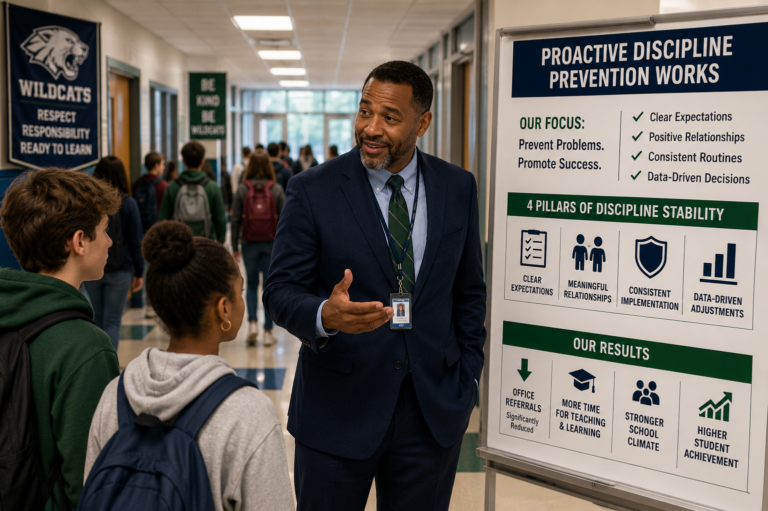
The 4 Pillars of Discipline Stability address this core problem. First, predictable responses eliminate guesswork. Next, clear escalation paths guide every adult decision. Then, consistent follow-through builds student trust. Finally, systematic documentation reveals patterns before they explode.
The Real Cost of Discipline Policy Chaos
Consider what happened at Jackson Elementary before they rebuilt their discipline system. Teachers reported 51 suspensions during one particularly difficult semester. However, these numbers only captured visible disruptions.
Because teachers couldn’t predict administrative support, many stopped reporting incidents entirely. Therefore, classroom disruptions increased while official data suggested improvement. Students learned to exploit inconsistencies between different teachers’ approaches.
Furthermore, the best teachers started requesting transfers to other schools. As a result, Jackson lost experienced staff members who could have mentored newer educators through difficult moments.
When Discipline Policy Creates Predictable Structure
After implementing systematic discipline reforms, Jackson Elementary transformed their building culture completely. Most importantly, they reduced suspensions from 51 to just 1 during comparable time periods. However, this dramatic improvement resulted from systems thinking rather than policy changes.
Teachers now follow the Accountability Loop during every significant disruption. First, they implement immediate response protocols without administrative approval. Next, they document incidents using standardized language and timing requirements. Then, they connect with support personnel through predetermined communication channels.
As a result, students experience consistent consequences regardless of which adult responds to their behavior. Furthermore, teachers feel confident handling challenging situations because the system supports their decisions automatically.
Building Systems That Hold Under Pressure
East Central High School demonstrates how systematic approaches create lasting change. Before reform implementation, they recorded 604 suspensions annually with graduation rates hovering around 52 percent. However, these numbers reflected deeper systemic problems rather than individual student failures.
The 3-System Breakdown revealed critical gaps in their approach. Prevention systems failed to identify struggling students early. Response systems created punishment without learning opportunities. Finally, recovery systems abandoned students after disciplinary incidents.
Therefore, East Central rebuilt each system component systematically. As a result, suspensions dropped to 84 annually while graduation rates climbed to 77 percent. Most importantly, teachers report higher job satisfaction because they can focus on instruction rather than behavior management.
Moving Beyond Policy to Systematic Solutions
Your discipline policy creates chaos when it prioritizes rules over relationships and punishment over problem-solving. However, effective discipline systems build predictable structures that support both teachers and students during difficult moments.
Rio Hondo ISD achieved a 99 percent reduction in discipline referrals through systematic implementation rather than policy revision. Furthermore, their approach focused on building capacity rather than enforcing compliance.
When teachers know exactly what to do next, they respond with confidence rather than hesitation. As a result, students learn that adults can be trusted to handle problems fairly and consistently. Therefore, the building culture shifts from reactive to proactive approaches.
Your current discipline policy might look comprehensive on paper. However, if teachers still improvise responses during critical moments, you have documentation rather than systems. Most importantly, you can INTERNAL LINK transform this pattern by focusing on predictable structures rather than perfect policies.
According to research from educational institutions, systematic approaches to discipline create more effective learning environments than traditional punitive policies. Therefore, your next step involves building systems that work when nobody is watching rather than policies that sound good during board meetings.
Ready to fix your school’s discipline system?
Schedule a free 30-minute Discipline Strategy Session with Dr. Thomas Glanton. No pitch — just a clear plan for your school.