You Lost Control Because Nobody Taught You This
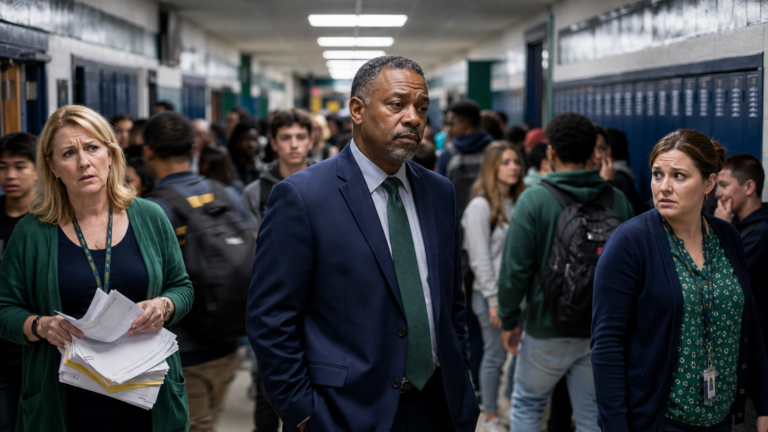
Your assistant principal ran three hours of discipline training in August. It’s March now. However, the hallways look exactly like they did last May. Referrals are climbing. Teachers are frustrated. Parents are calling. You’re wondering what went wrong.
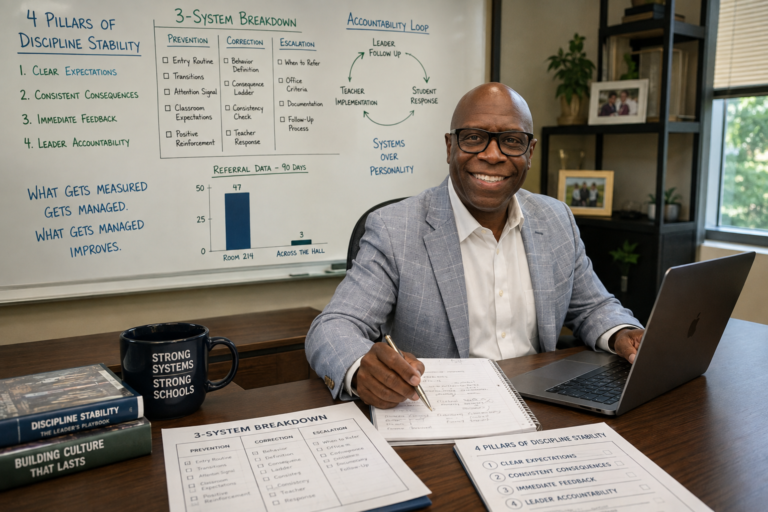
Here’s the truth most principals never hear: you didn’t lose control because your staff forgot the training. You lost it because the discipline accountability loop that was supposed to hold the training in place never got built. That’s what we call drift. And drift is always a systems failure, never a people failure.
What the Discipline Accountability Loop Actually Does
The Accountability Loop is how high-performing schools stop discipline drift before it starts. It has four components that work together like gears in a machine. First, you observe discipline responses in real time. Next, you align staff responses to match your building standards. Then, you correct immediately and appropriately when someone drifts off protocol. Finally, you monitor and repeat the cycle.
Remove any one of those four components and the whole loop breaks. When the loop breaks, you’re back to reactive discipline within sixty days. Not because your teachers stopped caring. Because the structure stopped holding them accountable.
Why Most Schools Treat Discipline Like an Event
Most schools approach discipline improvement the wrong way. A consultant comes in for a day. Staff sits through training and leaves with a binder full of strategies. Everyone feels energized for about two weeks. However, sixty days later, referrals are climbing again and nobody can explain why.
The binder didn’t fail. The discipline accountability loop was never closed. Therefore, teachers returned to their old habits because there was no system observing, aligning, correcting, or monitoring their follow-through. Training without infrastructure is just expensive hope.
EDCO has worked with more than 2,352 schools over forty years. As a result, we’ve seen this pattern repeat in every district and every demographic. Schools that engineer the Accountability Loop as a permanent operating system see referrals drop from hundreds to single digits within a single semester. Meanwhile, schools that rely on training days see temporary improvement followed by the same predictable slide.
What Happens When the Loop Breaks Down
Let’s walk through what this looks like in a real building. Your AP delivers solid training in August. Teachers learn de-escalation techniques, consistent consequences, and restorative language. For the first few weeks, everything runs smoothly. Consequently, you think the problem is solved.
Then October hits. A veteran teacher slides back into sending kids to the office for minor disruptions. Because nobody observes and corrects it, two more teachers follow suit. By November, your referral numbers look exactly like last year. This is discipline drift in action.
The loop broke at the first step: observation. Without someone physically in the hallways and classrooms watching how teachers respond to behavior, there’s no way to catch drift early. In addition, most schools don’t have a protocol for immediate correction when a teacher falls off the system. As a result, the training dissolves and chaos returns.
The Accountability Loop Is Not a Program
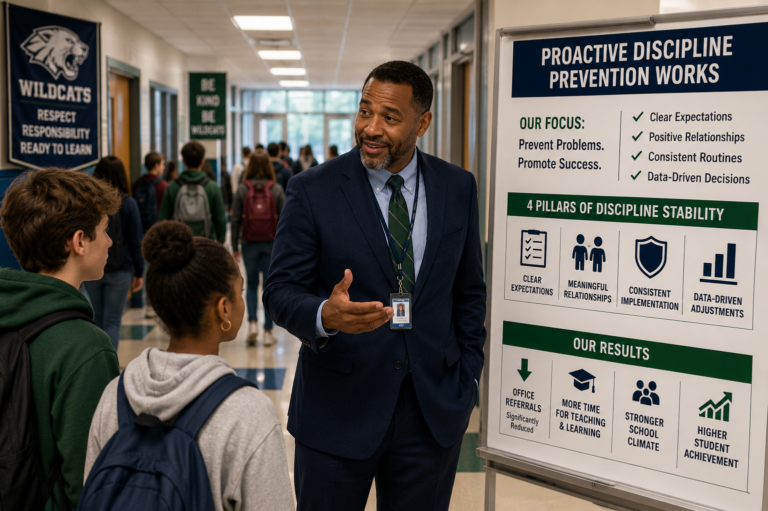
Here’s what makes the discipline accountability loop different from every other initiative your district has tried. It’s not a program you implement. It’s infrastructure you build into the way your school operates every single day. Programs come and go. Infrastructure stays.
For example, East Central High School in Arkansas was drowning in 604 suspensions and a 52 percent graduation rate. After building the Accountability Loop into their daily operations, suspensions dropped to 84 and graduation climbed to 77 percent. Similarly, Jackson Elementary in Georgia reduced suspensions from 51 to just one in a single year. Rio Hondo ISD in Texas saw a 99 percent reduction in discipline referrals.
These outcomes didn’t happen because principals bought a new program. They happened because leaders rebuilt their discipline systems with the Accountability Loop as the foundation. Most importantly, they sustained those results year after year because the loop kept running.
Where Your Loop Is Probably Breaking First
If you’re reading this and recognizing your building, you’re likely wondering where your loop is breaking down. In most schools, the breakdown happens at observation. Principals and APs are buried in meetings, paperwork, and compliance tasks. Therefore, they’re not in the hallways enough to see what’s actually happening with discipline responses.
When observation disappears, alignment becomes impossible. You can’t align staff responses if you don’t know what they’re doing. Consequently, correction never happens because nobody sees the drift. Finally, monitoring stops because there’s nothing consistent to measure.
The second most common breakdown point is correction. Many school leaders see the drift but hesitate to address it directly. They worry about staff morale or union pushback. However, when you fail to correct immediately, you signal that the system is optional. Teachers read that signal faster than you think.
How to Start Building Your Accountability Loop
Building a discipline accountability loop starts with an honest assessment of where your system is breaking. You need to identify which of the four components is missing or weak. Then, you need to engineer a solution that doesn’t rely on your personal presence to function.
This means creating observation schedules that put admin eyes in hallways during high-risk transitions. It means building a staff alignment tool so everyone knows what consequences match which behaviors. In addition, it means establishing a protocol for immediate correction when someone drifts off system. Finally, it means setting up a monitoring dashboard that tracks real-time discipline data so you can see patterns before they become crises.
If this sounds overwhelming, that’s because most principals try to build it alone. The schools that succeed fastest work with a partner who has already engineered these systems hundreds of times. EDCO’s Discipline Review walks you through exactly where your loop is breaking and what you need to fix first.
Stop Repeating the Same August
You’ve run the August training cycle enough times to know it doesn’t hold. However, you keep doing it because nobody showed you the alternative. The alternative is infrastructure. The alternative is the discipline accountability loop built into your daily operations so tightly that drift can’t take root.
When you build the loop correctly, discipline stops being a crisis you manage and starts being a system that runs. Teachers feel supported instead of blamed. Students know exactly what to expect. Parents stop calling with complaints. Most importantly, you get your building back.
If you want to know where your loop is breaking down, start with a free Discipline Review at therealedcoach.com/discipline-review. It’s built specifically for principals who are ready to stop repeating the same August and start building something that holds.
Ready to fix your school’s discipline system?
Schedule a free 30-minute Discipline Strategy Session with Dr. Thomas Glanton. No pitch — just a clear plan for your school.