Can You Fix School Discipline Problems Without Hiring More Staff
Stop me if you’ve heard this before: “We need more assistant principals to handle our discipline problems.” After three decades in K-12 leadership, I can tell you that’s exactly the wrong approach. You absolutely can fix discipline without hiring additional staff. However, most administrators miss the fundamental truth that discipline isn’t a people problem — it’s a systems problem.
Why Schools Think They Need More Staff for Discipline Solutions
Here’s what happens in most schools across America. Discipline referrals spike during the first quarter. Administrators feel overwhelmed by constant interruptions. Consequently, the knee-jerk response is requesting additional personnel from the district office.
This approach treats symptoms, not causes. When discipline systems are broken, adding more people just means more people operating within broken systems. Furthermore, you end up with multiple administrators handling identical cases inconsistently.
Meanwhile, teachers still don’t understand clear expectations. Students receive mixed messages about consequences. New hires need months of training and relationship-building before they become effective. By then, you’ve lost another semester to chaos.
Most importantly, this reactive staffing approach ignores what I call “Discipline Drift” — the gradual erosion of clear expectations that happens when schools lack systematic approaches to behavior management.
The Real Cost of Trying to Fix Discipline Through Additional Hiring
Consider Jefferson Middle School’s experience last year. They hired an additional dean to handle their 400+ monthly referrals. However, referrals actually increased to 475 per month within three months.
Why? Because the underlying systems remained broken. Teachers continued referring minor infractions they should have handled in class. Students learned that certain behaviors guaranteed removal from instructional time. Administrators operated without consistent consequences.
The new dean simply became another cog in a broken machine. Therefore, the school spent $65,000 in salary and benefits to make their discipline problems worse, not better.
This scenario plays out nationwide because schools misunderstand the root causes of discipline issues. Without systematic frameworks, additional staff members create more confusion rather than solutions.
How EDCO’s Systems Approach Helps You Fix Discipline Without Hiring
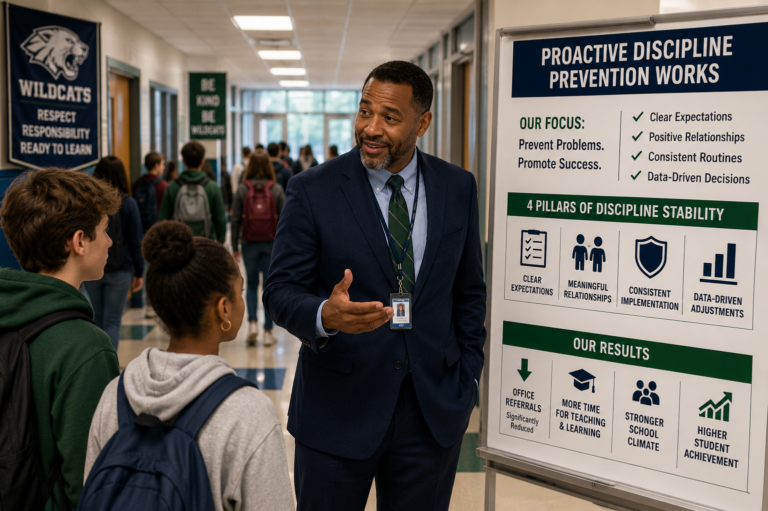
Effective discipline systems rely on what we call the “4 Pillars of Discipline Stability”: clear expectations, consistent consequences, proper communication, and continuous monitoring. When these elements work together, existing staff can handle significantly more cases with better outcomes.
First, clarity means every stakeholder knows exactly what behaviors trigger which consequences. No guesswork. No “it depends.” Teachers understand when to handle issues themselves versus when to refer to administration.
Second, consistency ensures identical violations receive identical responses regardless of which staff member handles them. This requires documented procedures, not just verbal agreements between administrators.
Third, communication creates feedback loops between teachers, administrators, parents, and students. Everyone stays informed about behavior plans and progress without constant meetings or confusion.
Finally, monitoring prevents what we call the “3-System Breakdown” — when classroom management, office procedures, and parent communication operate independently instead of supporting each other.
Practical Steps to Fix Discipline Problems Without Additional Personnel
Start by analyzing your current referral data. Most schools discover that 80% of their office referrals come from 20% of their teachers. This isn’t about “problem” teachers — it’s about inconsistent expectations and unclear procedures.
Next, establish clear guidelines for when teachers should handle situations versus when they should refer to administration. Create a simple decision matrix that removes guesswork from this critical choice.
Then, implement restorative practices that address underlying causes rather than just punishing symptoms. Traditional punishment often creates repeat offenders. However, restorative approaches build student ownership of solutions.
Additionally, train your existing staff to handle minor infractions consistently at the classroom level. This prevents small issues from escalating to major ones that require administrative intervention.
Finally, create what we call the “Accountability Loop” — data tracking systems that identify patterns before they become crises. Prevention always proves more efficient than reaction.
Real Results: Schools That Successfully Fixed Discipline Without Hiring
East Central High School in Texas provides a compelling example. They reduced suspensions from 604 to 84 in one year without adding staff. Simultaneously, their graduation rate jumped from 52% to 77% because students stayed in class instead of serving suspensions.
Jackson Elementary achieved even more dramatic results. Their suspensions dropped from 51 to just 1 per year after implementing systematic behavior expectations and training teachers to address minor issues consistently.
Most impressively, Rio Hondo ISD reduced office referrals by 99% district-wide without hiring additional disciplinary staff. They achieved this by focusing on systems rather than staffing levels.
These aren’t isolated examples. Schools nationwide are discovering that systematic approaches outperform staffing solutions consistently. The key is committing to systems change rather than quick fixes that drain budgets without solving problems.
Moving Forward with Systematic Solutions Instead of More Staff
Your next step requires conducting an honest assessment of your current discipline procedures. Do teachers understand when to refer versus when to handle issues themselves? Are consequences consistent across all administrators? Do students understand expectations clearly before problems occur?
Most importantly, are you treating discipline as a systems challenge or a staffing shortage? The answer determines whether you’ll achieve sustainable improvement or temporary relief followed by continued frustration.
Remember that you can fix discipline without hiring additional staff when you address the root causes systematically. Your current team possesses more capability than you realize — they just need better systems to support their efforts.