Why School Rules and Systems Must Work Together for Real Discipline Change
Every week, principals share the same frustrating story with me: “We have clear rules, but nothing changes.” However, what they’re missing is that school rules and systems must function as partners, not separate entities. After three decades in K-12 leadership, I’ve witnessed this fundamental disconnect destroy otherwise excellent schools.
Rules without systems create chaos. Systems without rules create confusion. Therefore, successful discipline requires both elements working together seamlessly.
How School Rules and Systems Serve Different Purposes
Most administrators focus heavily on writing better rules while completely ignoring the systems needed to support them. This approach fails every time because rules and systems address different aspects of discipline management.
Rules answer the “what” questions in your school. What behaviors do we expect from students? What happens when those expectations aren’t met? What consequences will follow specific infractions?
Meanwhile, systems answer the crucial “how” questions. How do we ensure consistent enforcement across all classrooms? How do we track behavioral patterns over time? How do we communicate effectively with parents? How do we support struggling teachers?
Without proper systems backing them up, even perfectly written rules become meaningless pieces of paper. Students quickly identify which teachers enforce rules consistently and which ones don’t. Consequently, behavior problems migrate toward classrooms with weak enforcement, creating what we call “Discipline Drift” at EDCO.
Why School Rules Fail Without Supporting Systems
Last month, I visited a middle school with an impressive 47-page student handbook. The rules were comprehensive, clearly written, and legally sound. However, behavior problems persisted because no system existed to support consistent implementation.
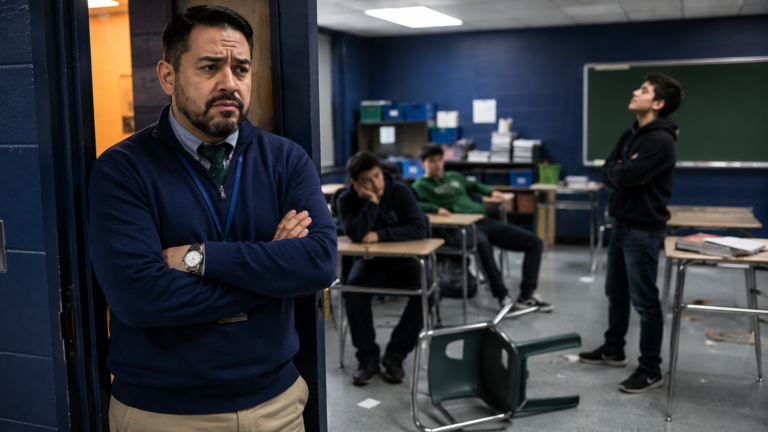
Here’s what I observed during my walkthrough: Teacher A immediately sent students to the office for talking back. Teacher B ignored identical behavior completely. Teacher C handled the same infraction with a parent phone call. Therefore, students learned that consequences depended entirely on who was watching them.
This inconsistency undermines everything schools try to accomplish with discipline. Students constantly test boundaries because they’ve learned enforcement varies dramatically from classroom to classroom. Parents become confused and frustrated when their child’s experience differs depending on the teacher. Additionally, teachers lose confidence in administration when they witness uneven support for discipline policies.
Furthermore, rules without systems create what I call a “discipline lottery.” Students never know what will happen when they misbehave, and this uncertainty actually increases problem behaviors rather than reducing them.
Building Effective School Rules and Systems Together
Successful schools don’t treat rules and systems as separate projects. Instead, they develop both components simultaneously using a strategic approach that ensures alignment.
Start by identifying your non-negotiable behaviors. What three or four behaviors have the greatest impact on learning and safety? Don’t create an overwhelming list of twenty rules that nobody can remember. Focus on the critical few that matter most for your school culture.
Next, design your response system before finalizing any rules. How will you document incidents consistently? What training will staff receive? What support mechanisms will help struggling teachers improve their classroom management? Most importantly, how will you monitor implementation to catch problems early?
Create crystal-clear escalation procedures that everyone understands. Map out the sequence of responses for first offenses, second offenses, and repeated patterns. Furthermore, ensure every staff member knows their specific role in the discipline process and feels confident executing it.
Finally, build robust monitoring mechanisms into your system. You need real-time data showing whether your approach is working. Track referral patterns by teacher, time of day, and infraction type. Survey teachers about their confidence levels. Monitor student outcomes beyond just suspension numbers.
Common Mistakes That Undermine School Rules and Systems
The biggest mistake principals make is treating discipline as a personnel problem rather than a systems problem. When enforcement is inconsistent, they blame teachers for not following through. When teachers struggle with classroom management, they blame lack of administrative support. Meanwhile, everyone blames students and parents for not caring enough.
This blame cycle misses the fundamental issue entirely. When discipline fails consistently across multiple classrooms, it’s almost always a systems failure, not a people failure. Good teachers can’t succeed within broken systems, regardless of their skill level or commitment.
Another critical error is over-complicating the rules structure. Schools create elaborate matrices with dozens of infractions and corresponding consequences. Teachers can’t remember the procedures, so they improvise their own approaches. Simplicity always beats complexity when it comes to consistent implementation.
Finally, many schools announce new discipline policies without changing their underlying systems. They distribute updated handbooks but provide no training, no ongoing support, and no follow-up monitoring. Predictably, nothing improves because the system infrastructure remains unchanged.
Research Supporting Systematic Approaches to Discipline
The evidence overwhelmingly supports systematic approaches to school discipline. According to research from Positive Behavioral Interventions and Supports, schools implementing comprehensive frameworks reduce office referrals by 20-60% within the first year.
These successful schools don’t just have better rules – they have dramatically better systems supporting those rules. They train staff consistently using proven methods. They monitor implementation regularly through data collection. They adjust their approaches based on evidence rather than emotions or assumptions.
More importantly, systematic approaches improve overall school climate far beyond just reducing misbehavior incidents. Teachers report feeling more supported and confident. Students experience greater security and fairness. Parents observe consistency that builds trust in the school’s leadership.
At EDCO, we’ve documented remarkable results when schools properly align their rules and systems. Rio Hondo ISD achieved a 99 percent reduction in discipline referrals. Jackson Elementary dropped from 51 suspensions to just 1. East Central High School reduced suspensions from 604 to 84 while increasing graduation rates from 52 to 77 percent.
Implementing School Rules and Systems in Your Building
Meaningful change requires unwavering leadership commitment from day one. You cannot delegate system-building to a committee while focusing your attention elsewhere. This work demands principal involvement at every stage of development and implementation.
Begin by conducting a thorough audit of your current state. What rules currently exist? How are they being enforced across different classrooms? Where do you observe the most significant gaps between policy and practice? Additionally, gather honest input from teachers about what’s working well and what isn’t.
Then design your ideal future state with specific detail. What would perfect consistency look like in your hallways and classrooms? How would staff respond to common infractions? What support structures would help teachers feel confident and successful?
Develop a realistic implementation timeline that allows for proper training and gradual rollout. Start with a limited pilot program before expanding schoolwide. Monitor progress closely and adjust quickly when data reveals problems. Remember, effective systems require ongoing refinement based on real-world feedback.
Your school can achieve dramatic improvement in discipline outcomes. However, success requires equal commitment to building both strong rules and strong systems that support them. Half-measures consistently produce half-results, while comprehensive approaches transform school culture permanently.